Agent Memory Providers Compared: Eight Backends for Persistent Agents
Assistants forget everything at tab-close unless something persists past the context window. Memory providers — services or libraries holding facts and summaries across sessions, usually wired as plugins — keep the framework thin while memory scales. Eight backends cover the space from zero-dependency local to enterprise cloud.
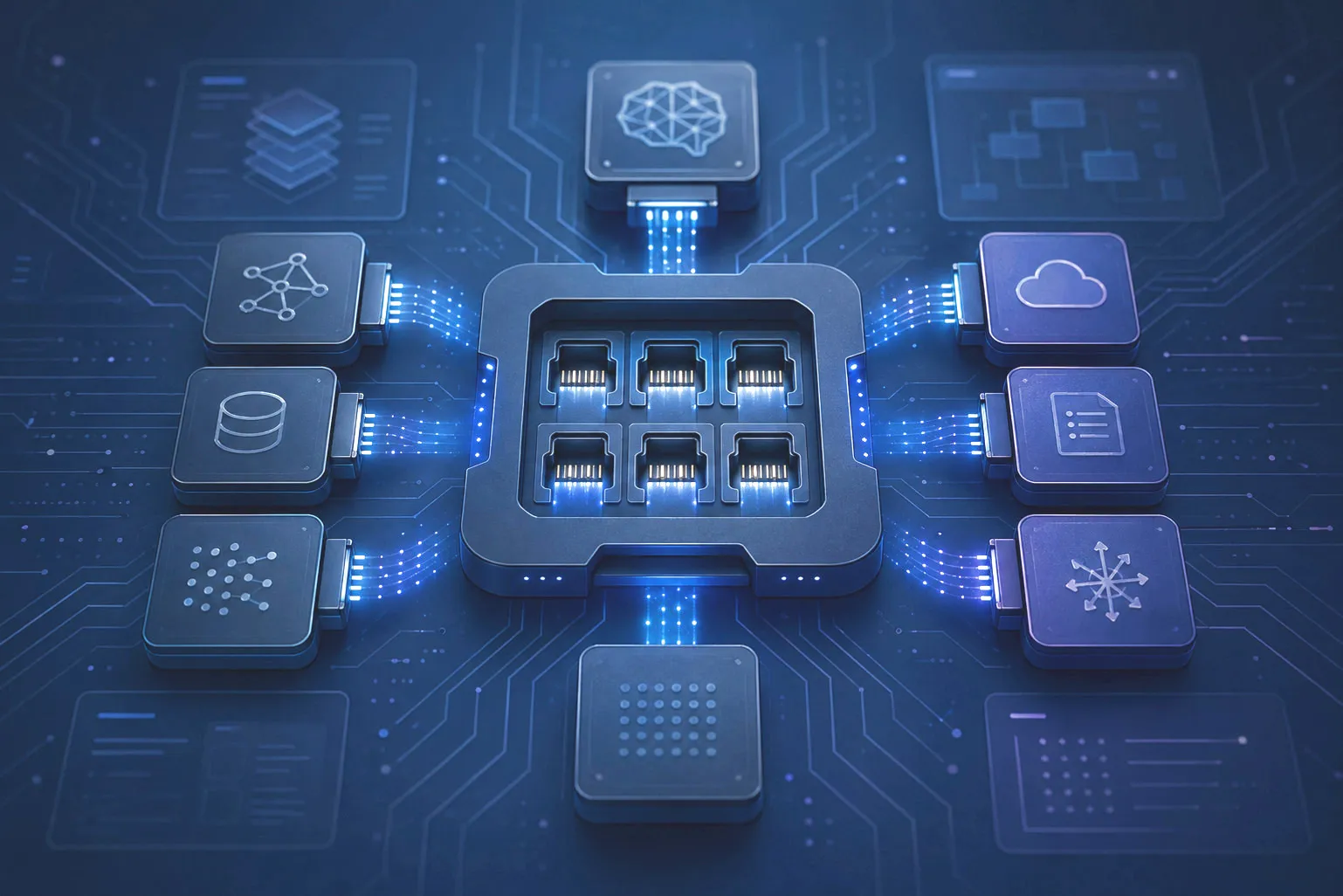 One active plugin beside built-in files: matching backend to privacy, cost, and ops reality
Selection First
| Provider | Storage | Cost | Self-hostable | Standout |
|---|---|---|---|---|
| Honcho | Cloud / self-hosted | Paid / free | Yes, Docker/K3s | Dialectic user modeling, session context |
| OpenViking | Self-hosted | Free | Yes, local + Ollama wizard | Filesystem hierarchy, tiered loading |
| Mem0 | Cloud / self-hosted | Paid / free OSS | Yes, Docker Compose | Server-side LLM extraction |
| Hindsight | Cloud / local | Free / paid | Yes, Docker or embedded | Knowledge graph + reflect synthesis |
| Holographic | Local | Free | Native, zero infra | HRR algebra, trust scoring, no dependencies |
| RetainDB | Cloud | $20/mo | No | Delta compression |
| ByteRover | Local / cloud | Free / paid | Yes, local-first | Markdown context tree, no embeddings |
| Supermemory | Cloud | Paid | Enterprise Cloudflare only | Context fencing, session graph ingest |
One external provider runs at a time; built-in files (MEMORY.md, USER.md) stay loaded alongside — additive, never replacement. Activate via picker (hermes memory setup), status check, or config (memory.provider), with per-backend credentials in env or JSON.
Dependency Reality
Everything except Holographic needs at least one external call — LLM extraction, embeddings, or PostgreSQL — with direct privacy, cost, and self-hosting consequences. Holographic runs fully in-process on HRR algebra: weakest retrieval, strongest privacy story, the only unconditional local option. Where backends accept Ollama or OpenAI-compatible endpoints, route both LLM and embedding calls locally and keep data off third-party servers entirely: Hindsight and ByteRover bundle most, Honcho/Mem0/Supermemory need most parts supplied.
Notable mechanics: Honcho models conversations as user/AI peer pairs sharing a workspace, with cadence knobs for refresh, dialectic depth, recall mode (hybrid/context/tools), and flush timing. OpenViking’s init wizard detects RAM and recommends Ollama embedding/VLM models for zero-key local setup, no database required. Mem0 extracts facts server-side per add with Qdrant or pgvector underneath. Hindsight runs four retrieval strategies (semantic, BM25, graph, temporal) fused by rank, plus reflect cross-memory synthesis. ByteRover keeps a markdown domain tree searched by full-text with LLM fallback — human-readable, auditable, embedding-free. RetainDB processes everything (Claude Sonnet extraction) on its cloud: convenient, sovereignty-incompatible. Supermemory fences context and ingests session graphs, self-hosting gated behind enterprise Cloudflare with mandatory OpenAI key.
Choose by Constraint
Multi-agent support goes Honcho; free self-hosted goes OpenViking or Holographic; zero-config goes Mem0; knowledge graphs go Hindsight; delta compression goes RetainDB; bandwidth efficiency goes ByteRover; enterprise fencing goes Supermemory; strict local-only goes Holographic unconditionally, or Hindsight/Mem0/ByteRover backed by Ollama. For the bounded two-file core these plugins extend, see Hermes agent memory system; for the working/structured/retrieval layer model, memory systems.
Summary
Match the backend to the binding constraint — privacy, ops burden, multi-agent needs, or auditability — and keep built-in files as the always-on core with one plugin beside them.
Which memory backend survives your privacy and ops constraints? Share the stack in the comments below!