Ai-Agents

Multi-Agent Orchestration Patterns: Six Topologies and How Each Breaks

Multi-Agent Orchestration Patterns: Six Topologies and How Each Breaks

6 min read

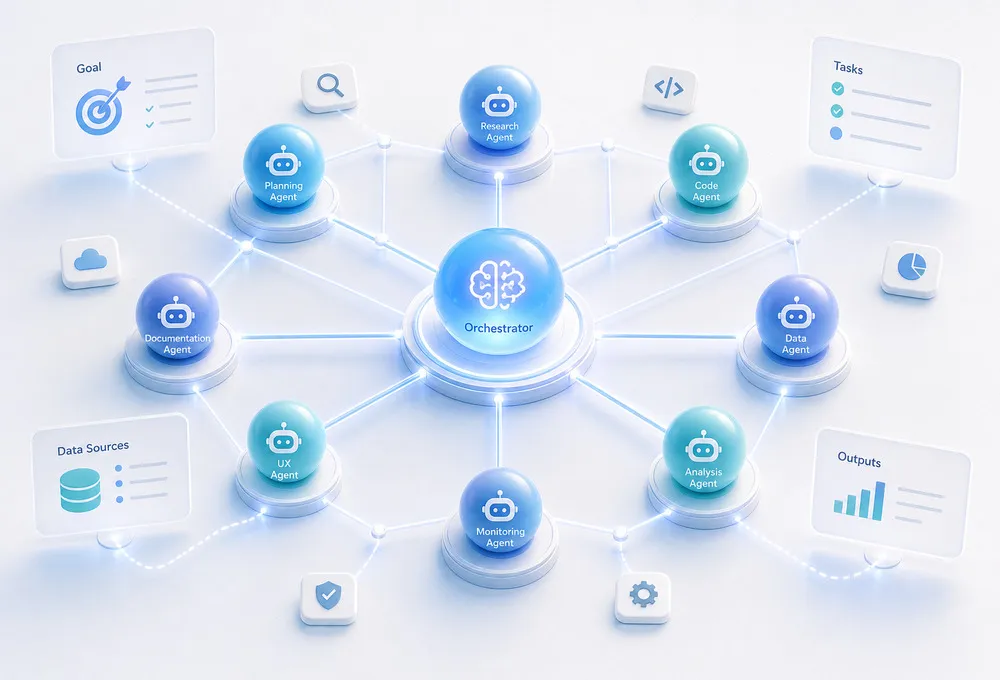
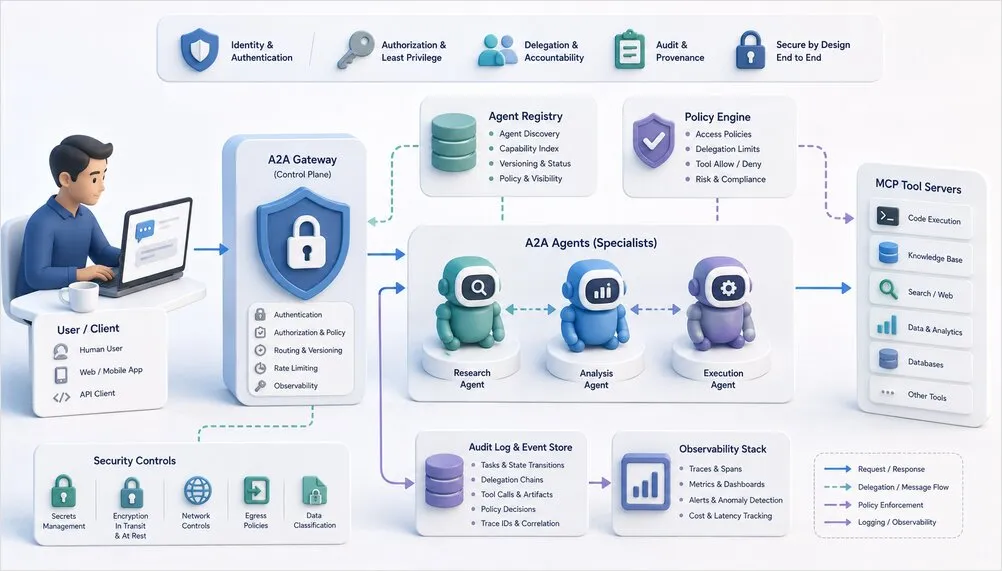
Single-agent systems peaked with bounded tasks and one prompt. Production moved on: organizations now run double-digit agent counts, and a large share of multi-agent pilots die within months of deployment. The killer isn’t the idea — it’s picking the wrong coordination topology, or the right one without knowing its failure modes.

Pi Coding Agent Review: A Minimal Harness You Finish Yourself

Pi Coding Agent Review: A Minimal Harness You Finish Yourself

8 min read

Most coding agents keep getting bigger: planning modes, subagents, permission layers, IDE integrations, background workers. Pi walks the other way. Four default tools — read, write, edit, bash — with everything interesting left to extensions, skills, packages, and your own workflow. It is less a finished product than an editable harness, and that is exactly the point.

SDD vs Vibe Coding: Waterfall with Markdown or Controlled Iteration?

SDD vs Vibe Coding: Waterfall with Markdown or Controlled Iteration?

6 min read

Spec-driven development entered 2026 as the serious developer’s answer to vibe coding drift: implement against a reviewed specification, not an ad-hoc prompt. Hacker News called it “Waterfall Strikes Back.” Both sides have a point — and the practical question was never which side wins, but how much spec a specific task needs.

Superpowers: Enforced Spec-Driven Skills for Coding Agents

Superpowers: Enforced Spec-Driven Skills for Coding Agents

7 min read

Most spec-driven setups fail the same way: a solid plan-implement skill gets used diligently for a week, then quietly abandoned the first time a deadline gets close. Nothing in a hand-rolled skill stops that drift. Superpowers answers the discipline problem directly — a skills package that makes brainstorming, planning, subagent review, and strict TDD mandatory steps the agent checks before every task.

OpenCode CLI in Practice: Scriptable Agent Workflows That Hold Up

OpenCode CLI in Practice: Scriptable Agent Workflows That Hold Up

10 min read

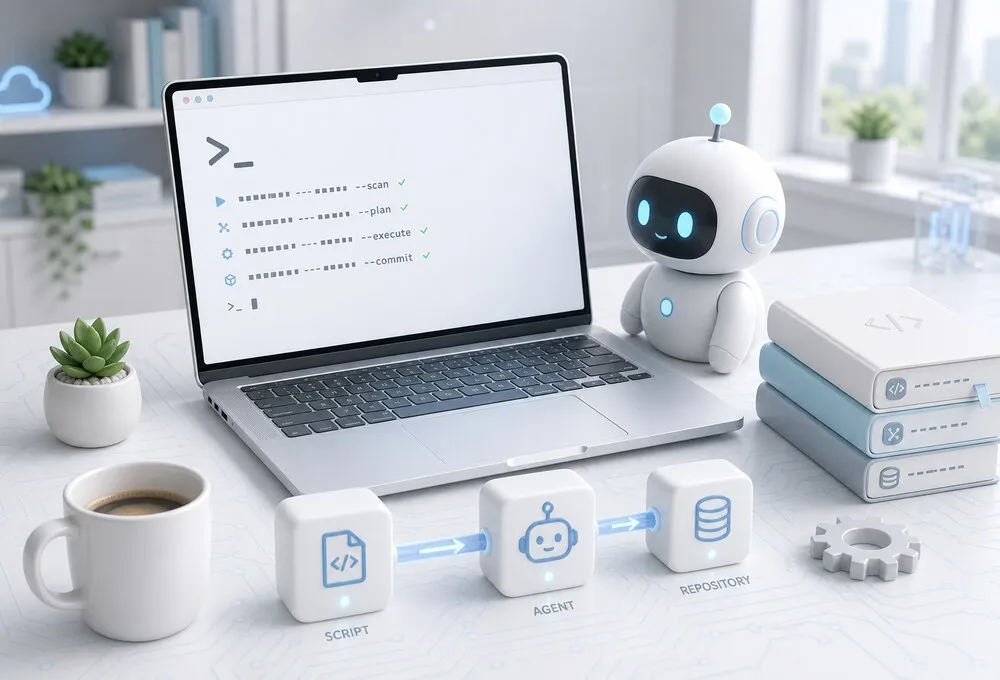
OpenCode’s command-line interface turns the coding agent into a scriptable tool: the same agent environment runs in the interactive TUI and non-interactively from shell scripts, CI jobs, and Makefiles. Small tasks work within minutes, but serious use depends on repository instructions, permission boundaries, context discipline, and model selection.

Agent Skills vs MCP Servers: Where Should the Responsibility Live?

Agent Skills vs MCP Servers: Where Should the Responsibility Live?

13 min read

Agent skills and MCP servers are often presented as competing ways to extend an AI agent. That framing is wrong: a skill teaches the agent how to work, while an MCP server gives it governed access to live capabilities. The useful question is not which standard wins, but where each responsibility should live.

GSD – Get Shit Done: AI-Powered Spec-Driven Development Pipeline

GSD – Get Shit Done: AI-Powered Spec-Driven Development Pipeline

6 min read

If you’ve spent any time working with AI coding assistants, you’ve probably encountered context rot — that moment when your AI session loses track of what it’s doing, starts hallucinating, or produces code that doesn’t match the original plan. The more complex the task, the faster things spiral.

Hermes Agent vs OpenClaw: The Ultimate AI Agent Showdown

Hermes Agent vs OpenClaw: The Ultimate AI Agent Showdown

11 min read

The AI agent landscape in 2026 is crowded, noisy, and full of promises. Two names keep surfacing in developer conversations: OpenClaw and Hermes Agent. Both claim to be the autonomous assistant that finally bridges the gap between AI reasoning and real-world execution. Both are open-source. Both run locally. Both connect to messaging platforms.