Ais

Multi-Agent Orchestration Patterns: Six Topologies and How Each Breaks

Multi-Agent Orchestration Patterns: Six Topologies and How Each Breaks

6 min read

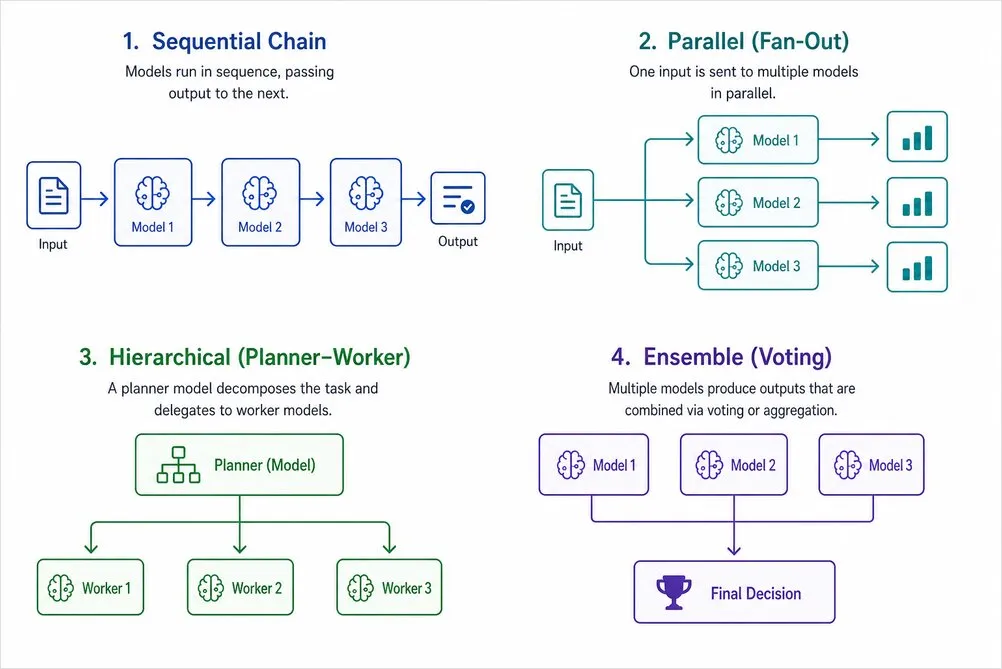
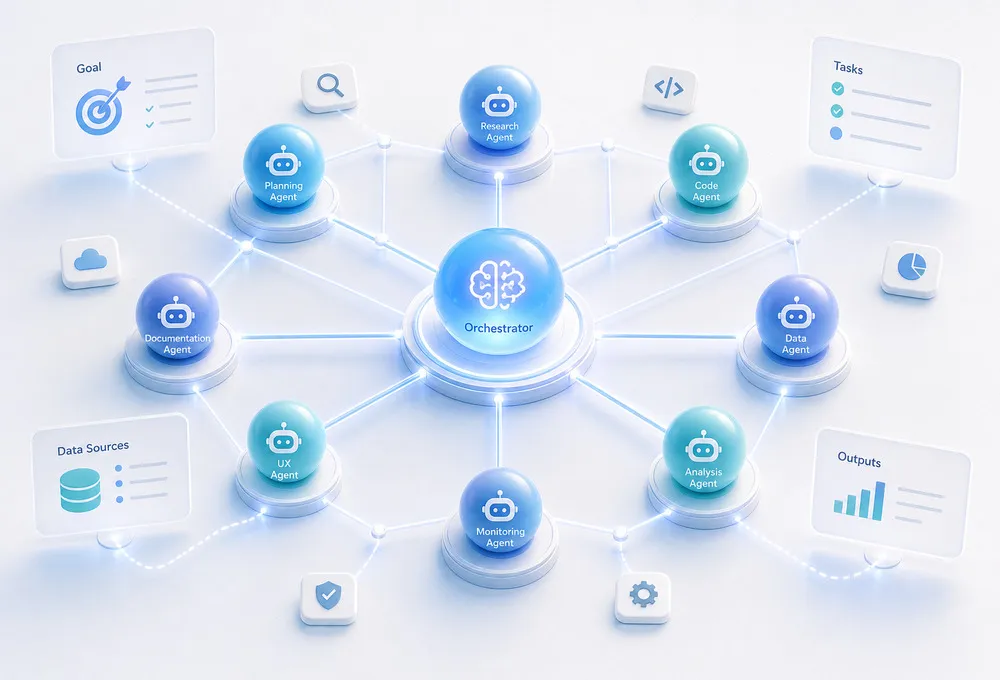
Single-agent systems peaked with bounded tasks and one prompt. Production moved on: organizations now run double-digit agent counts, and a large share of multi-agent pilots die within months of deployment. The killer isn’t the idea — it’s picking the wrong coordination topology, or the right one without knowing its failure modes.

Open WebUI: Self-Hosted ChatGPT Alternative for Local LLMs

Open WebUI: Self-Hosted ChatGPT Alternative for Local LLMs

3 min read

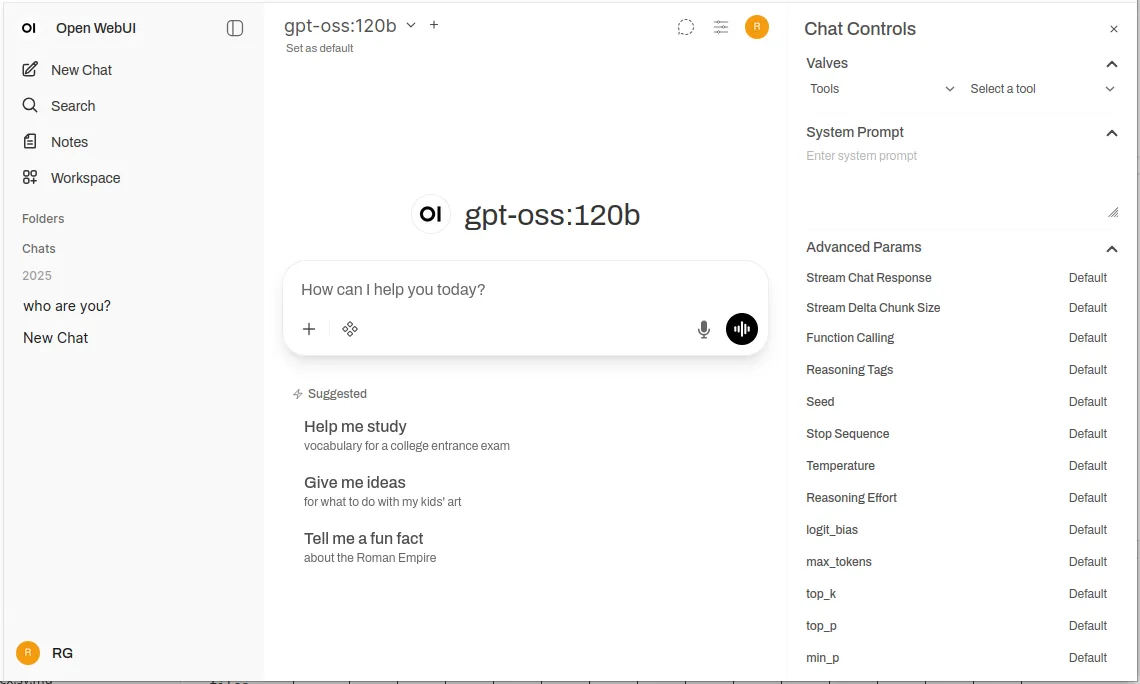
Open WebUI brings the ChatGPT experience onto your own infrastructure: Ollama plus any OpenAI-compatible backend behind a modern chat UI with RAG document chat, multi-user auth, voice, prompt tooling, and model management. Privacy-first, offline-capable, and scalable from laptop Docker runs to Kubernetes fleets.

Ollama to vLLM: When Your Local Server Needs to Grow Up

Ollama to vLLM: When Your Local Server Needs to Grow Up

6 min read

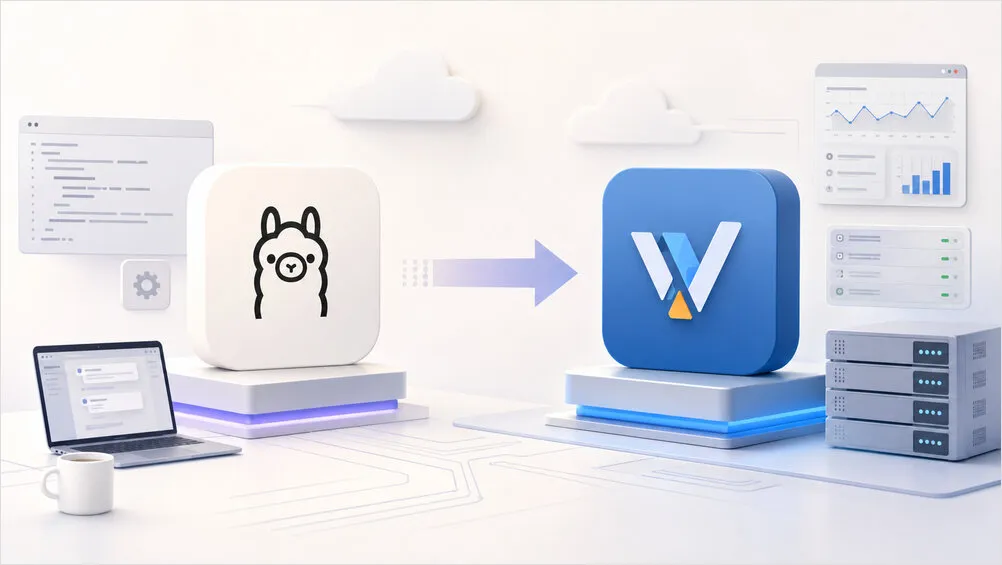
Ollama is the easiest way to run a local model, until the experiment becomes a shared service. Requests queue, latency wobbles, prefixes recompute, and one GPU stops being enough. vLLM answers exactly those problems — but migration is a trade, not an upgrade: simplicity for scheduling, memory control, parallelism, and production operations.

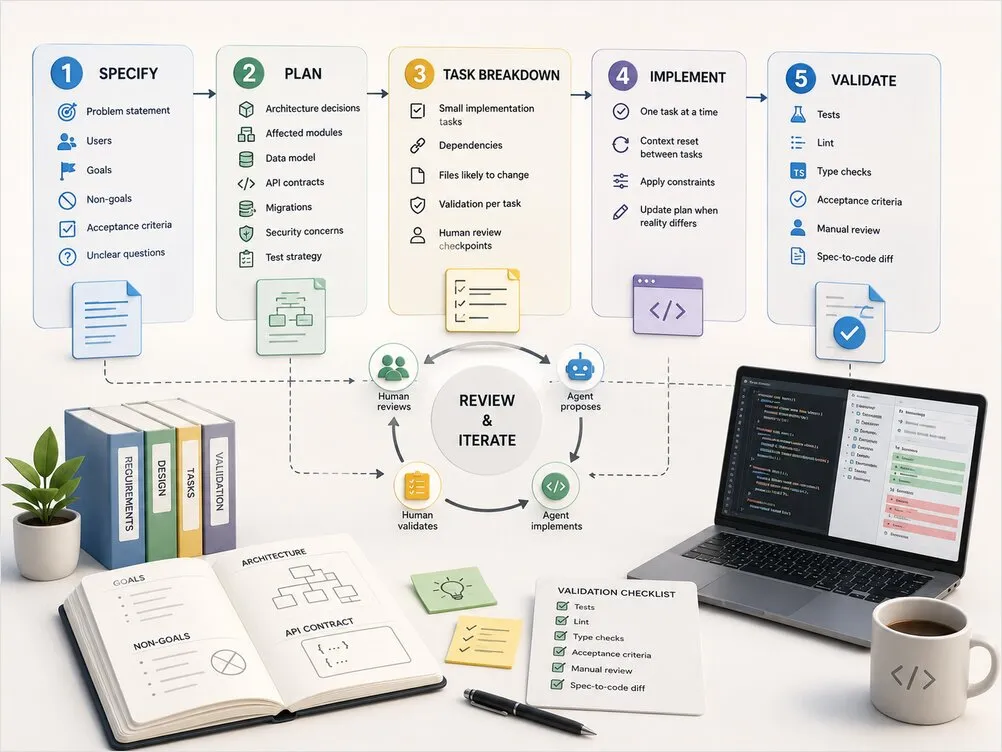
The SDD Workflow: Five Phases from Requirements to Verified Code

The SDD Workflow: Five Phases from Requirements to Verified Code

6 min read

Spec-driven development works when the specification is a workflow, not a document filed away after kickoff. The point is a sequence of reviewable artifacts — requirements, design, tasks, implementation, validation — each reducing ambiguity before anyone, human or agent, changes production code.

Pi Coding Agent Review: A Minimal Harness You Finish Yourself

Pi Coding Agent Review: A Minimal Harness You Finish Yourself

8 min read

Most coding agents keep getting bigger: planning modes, subagents, permission layers, IDE integrations, background workers. Pi walks the other way. Four default tools — read, write, edit, bash — with everything interesting left to extensions, skills, packages, and your own workflow. It is less a finished product than an editable harness, and that is exactly the point.

Keeping Specs, Tests, and Code in Sync When Agents Write Fast

Keeping Specs, Tests, and Code in Sync When Agents Write Fast

5 min read

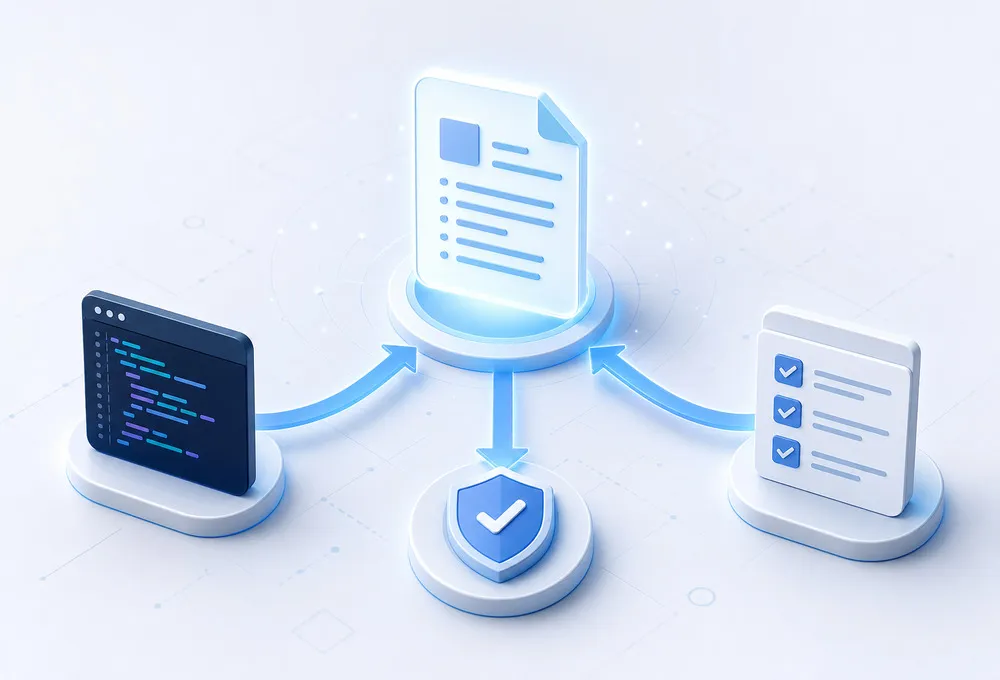
A spec nobody re-checks against the running system is worse than no spec: reviewers trust the document instead of the diff while the agent follows whatever the code actually does. Agents regenerate code fast, and each regeneration is a fresh chance for spec and implementation to diverge. The fix is a small enforceable link between requirement, design decision, tests, and the commits that changed them.

Decision Records: The Missing Memory Layer for AI Coding Agents

Decision Records: The Missing Memory Layer for AI Coding Agents

4 min read

AI-generated code is cheap; judgment is scarce. When models write the code, nobody remembers why PostgreSQL beat DynamoDB, why AI emails must stay drafts, or why suggestions live in a side panel. Decision records — short, version-controlled documents capturing what was decided, why, and what was rejected — turn that judgment into durable project memory both humans and agents can read.